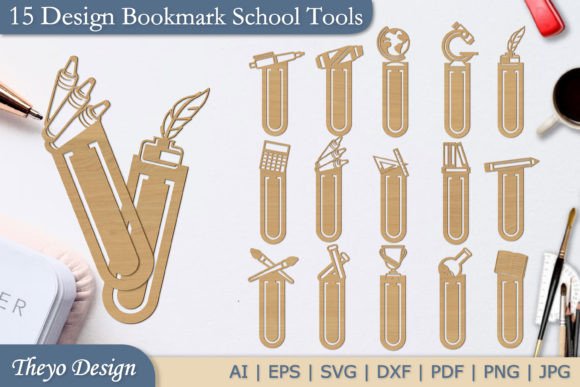
Review: 15 Design School Tools Bookmark LaserCut
As a designer who has spent years digitizing patterns and testing them on everything from delicate silk to heavy denim, I approach new assets with a critical eye. We are constantly hunting for that perfect blend of aesthetic charm and technical feasibility. Recently, I evaluated the 15 Design School Tools Bookmark LaserCut collection. At first glance, the title suggests these are strictly for paper crafts or vinyl cutting, given the "Laser Cut" descriptor and the mention of compatibility with Silhouette and Cricut machines. However, for those of us in the embroidery world, vector-based cut files often hold hidden potential as foundational templates for machine embroidery design work, particularly for appliqué or complex satin stitch outlines.
First Impressions: Nostalgia Meets Utility
The immediate mood of this collection is playful yet professional. The theme revolves around classic design school tools—rulers, compasses, pencils, and set squares. This isn't just cute; it’s thematic. It speaks directly to architects, graphic designers, students, and creative professionals. When I opened the ZIP file, I was looking for clean lines and logical geometry. In embroidery, geometric precision is non-negotiable. If a ruler looks bent in the digital preview, it will look disastrous once stitched out. The visual personality here is crisp and minimalist, which is exactly what you want when working with small-scale items like bookmarks or narrow patches.
For an embroidery project, these shapes offer a fantastic opportunity to mix media. While the product description highlights their use as cutting files for craft machines, an experienced embroiderer sees these as perfect outlines for appliqué. Imagine using felt or leather scraps cut with your Cricut, then securing them with a tight satin stitch border. This hybrid approach saves thread count and reduces bulk, making it ideal for items that need to remain flexible.
Real-World Application: The Custom Tote Bag Scenario
To truly test the viability of these designs, I imagined a specific client request: a custom tote bag for a local architecture firm’s end-of-year gifts. They wanted something subtle, branded, and useful. Using the ruler and compass motifs from the 15 Design School Tools Bookmark LaserCut set, I envisioned a linear arrangement along the bottom hem of a canvas tote bag design.
In this scenario, the finished product needs to withstand daily wear. Canvas is a sturdy fabric, but it has a distinct texture. If I were to digitize these cut files into an embroidery format, I would need to account for the fabric’s weave. A simple running stitch might get lost in the texture, so a slightly denser fill or a double-pass satin stitch would be necessary to ensure the design pops. The "bookmark" aspect of the original design implies a long, narrow format, which translates perfectly to vertical embroidery on bag straps or side seams.
Beyond tote bags, consider sweatshirt embroidery. A small compass icon on the cuff or chest pocket of a crewneck sweatshirt adds a touch of intellectual flair. Because the shapes are recognizable silhouettes, they don’t require intricate internal detailing to be understood. This simplicity is a strength. It means the design remains legible even when scaled down, which is crucial for personalized gift items where space is limited.
Technical Considerations for Embroiderers
It is vital to address the elephant in the room: these are sold as cutting files. The description states they are designed for Silhouette, Cricut, or other cutting machines. As an embroidery professional, you cannot simply load these into your embroidery machine. You must convert or trace them into a compatible digital embroidery file format (such as PES, DST, or EXP). This requires digitizing software and a good understanding of how to translate vector paths into stitch types.
When converting these graphics, pay close attention to stitch density. Sharp corners, like those found on set squares or triangular rulers, are prone to thread breaks if the needle turns too sharply. You will need to add underlay stitches to stabilize the fabric and perhaps round off the sharpest points slightly in your digitizing software. Additionally, verify the hoop size requirements. While bookmarks are small, if you plan to combine multiple tools into a single composition for a larger custom apparel piece, you may need a 5x7 or 6x10 hoop to maintain proper spacing between elements.
Fabric choice plays a massive role here. For baby embroidery projects, such as a bib or onesie featuring a cute pencil motif, you must use a soft stabilizer and avoid dense fills that could irritate sensitive skin. On the other hand, for an embroidered patch intended for a jacket, you can go heavier with the thread weight and use a cut-away stabilizer for durability. Always test the design on scrap fabric first. Check how the thread colors contrast against both light and dark backgrounds. A yellow pencil on white fabric might vanish, requiring a darker outline or a change in palette.
Commercial Viability and Brand Consistency
For Etsy sellers and small shop owners, this collection offers high commercial potential. The "design school" theme taps into a niche market of students and professionals who appreciate industry-specific humor and aesthetics. These motifs work beautifully for holiday embroidery gifts, such as teacher appreciation presents or graduation keepsakes. The key to success is presentation. Use high-quality printable mockup images to show how these designs look on actual products. A flat vector image doesn't sell the emotion; a photo of a stitched compass on a leather journal does.
However, caution is advised regarding licensing. Since these are primarily marketed as cutting files, you must confirm whether the creator allows for commercial use of the derived embroidery designs. Never assume that because you bought the file, you can sell the stitched output without checking the terms. Clear communication with your customers about the handmade nature of the product builds trust. When a customer receives a handmade product with clean, well-digitized stitching, it reinforces the value of your brand.
Final Verdict
The 15 Design School Tools Bookmark LaserCut set is a versatile asset for the creative entrepreneur who understands how to bridge the gap between cutting and stitching. While not ready-to-stitch out of the box, the clean geometry and thematic relevance make it an excellent foundation for commercial embroidery projects. Whether you are creating craft business inventory for a local fair or designing bespoke items for online sales, these graphics provide a solid starting point. Just remember to respect the technical limits of your machine, choose the right stabilizer, and always prioritize stitch clarity over complexity. With careful digitizing, these simple tools can become standout features in your portfolio.